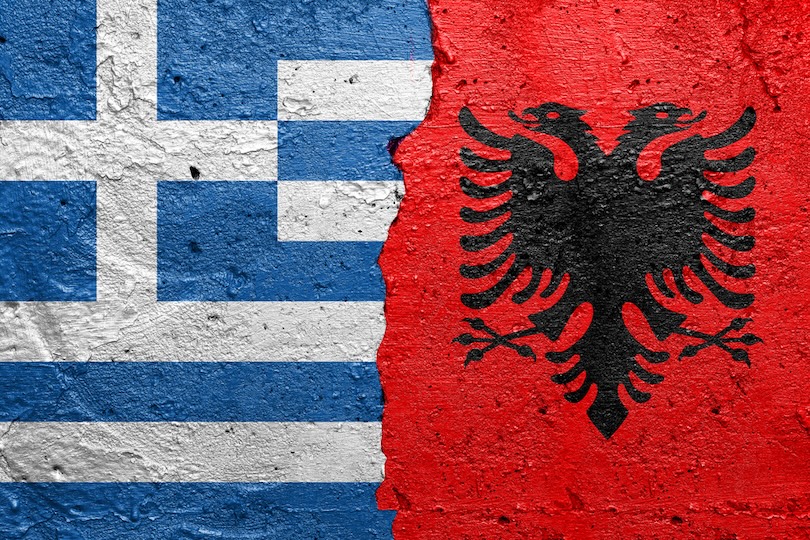
The Northern Epirus region, located in southern Albania, has been a longstanding focus of contestation between Greece and Albania. Emerging as a diplomatic term in 1912, the region has been shaped by historical, ethnic, and political dynamics, from Ottoman rule through the Balkan Wars, the interwar period, the communist era, and into the contemporary Albanian state. This article traces the historical roots of the Northern Epirus question, examines the role of international actors in shaping the region’s fate, and analyzes the evolving status of the Greek minority. It argues that protection of minority rights is central to regional stability and the normalization of Greek–Albanian relations. Furthermore, the study situates Northern Epirus within broader debates in Balkan history, ethno-nationalism, and minority protection in post-imperial states.
The term “Northern Epirus” (Voreios Ipeiros) emerged as a political and diplomatic designation in the early twentieth century. Its first systematic appearances are recorded in diplomatic documents of 1912, where it was employed to distinguish the northern part of the Ottoman Vilayet of Ioannina—ultimately assigned to the newly established Albanian state—from the southern part, which was incorporated into Greece following the Balkan Wars. As such, Northern Epirus was not a historically fixed territorial entity but rather a product of late Ottoman disintegration and Great Power diplomacy (Meletios 1807). Conventionally, the region is understood to extend between the Genusus (Shkumbi) River to the north and the Corfu–Lesser Prespa axis to the south and east. Within these boundaries lay towns and smaller urban centers with a notable Greek presence, including Gjirokastër, Korçë, Sarandë, and Himara. Until the Balkan Wars of 1912–1913, however, these territories were integral parts of the Ottoman Empire, and no internationally recognized borders separated them from the rest of Epirus.
From a longue durée perspective, the region has been characterized by pronounced cultural and demographic layering. In antiquity, several Greek city-states—such as Epidamnos, Chimaira, and Holokainion—were founded along the Adriatic and Ionian coasts. These settlements functioned as important trade hubs connecting the Greek world with Illyrian and wider Balkan populations. At the same time, the hinterland was inhabited by Illyrian populations, a people who left no written records and whom some historians associate with modern Albanians (Hammond 1967). During the medieval period, Greek-speaking populations predominated, and Christianity became the dominant religious affiliation. This configuration was significantly altered following the Ottoman conquest, which introduced Islam and led to substantial conversions over the ensuing centuries. Ottoman rule also restructured administrative divisions and property relations, introducing a complex feudal-like hierarchy that affected both Christian and Muslim communities (Stavrianos 1957). By the early twentieth century, Northern Epirus exhibited a complex social mosaic. Christian and Muslim communities coexisted, while Greek, Albanian, and Vlach (Aromanian) were often spoken concurrently, sometimes within the same household or settlement. This multilingual and multi-religious environment contributed to fluid identity formations, which made national allegiances difficult to determine by modern standards (Kokkolakis 2003). During this period, various ethnological maps were produced by competing national actors in an effort to substantiate territorial claims, yet these representations were frequently methodologically weak and politically motivated. In practical terms, identities in the region remained fluid until the Balkan Wars, with mixed populations constituting a structural feature rather than an anomaly.
The gradual decline of Ottoman authority and the rise of Balkan national movements transformed this fluidity into a source of contestation. Greeks and Albanians increasingly laid claim to the same territory, albeit on different ideological grounds. For the Greek state, Northern Epirus formed part of the broader irredentist project encapsulated in the Megali Idea, which envisaged the incorporation of all historically or ethnically Greek regions, including Epirus as a whole. Conversely, from the late 1870s onward, Albanian-speaking elites advanced demands for the unification of the four Ottoman vilayets inhabited by Albanian-speaking populations—Ioannina (including the whole Epirus), Monastir, Scutari, and Kosovo—a proposal that would effectively grant autonomy, if not independence, to an Albanian political entity (Skendi 1967). This bilateral rivalry was significantly intensified by the intervention of the Great Powers, whose interests were shaped by the region’s geostrategic position along the Adriatic. In particular, Austria-Hungary and Italy emerged as the principal external stakeholders in the years preceding the First World War. Both powers promoted the establishment of a strong Albanian state that could function as a strategic counterweight in the eastern Adriatic and as a satellite within their respective spheres of influence.
From the League of Prizren to the Fall of the Communist Hoxha Regime
In this context, Albanian nationalism developed relatively late compared to other Balkan nations. Until 1878, few intellectuals recognized Albanians as a distinct nation, and even fewer envisaged an independent state. This changed in part due to the strategic interests of Austria-Hungary and Italy, who sought to create influence zones in the western Balkans, and in part because certain Muslim Albanian-speaking beys feared Greek and Serbian territorial claims. These dynamics catalyzed the Albanian national movement, which gradually evolved into an organized political effort for autonomy and eventual independence (Frashëri 1964). The Albanian national awakening gained momentum in the decades preceding the Balkan Wars (1912–1913), which significantly reshaped the region’s political geography. During this conflict, Greek forces occupied major cities in Epirus—Ioannina, Gjirokastër, Korçë, and Himara—long inhabited by Greek-speaking Christian communities, while Serbian and Montenegrin armies secured other contested territories. Albanian nationalists, including Ismail Kemal Bey, secured Austro-Hungarian support for an independent Albanian state. By 1913, the Great Powers had sanctioned Albania’s establishment at the London Conference.
Generally, the Albanian national movement benefited materially and institutionally from Austro-Hungarian and Italian support, including financial assistance, the establishment of Albanian-language schools, and diplomatic backing. The extent of this involvement was made explicit in late 1913, when Vienna threatened Greece with military action should it refuse to evacuate Northern Epirus (Helmreich 1969). Thus, the Florence Protocol was signed by the Great Powers (December 1913). The latter formalized Albania’s southern borders, dividing Epirus: the northern portion was awarded to Albania, while the southern part became part of Greece. The Greek government, constrained by Great Power pressure, accepted these borders despite losing control over several Greek-speaking Orthodox communities. However, “Northern Epirotes” (the Greeks of the northern part of Epirus) resisted, demanding autonomy. In February 1914, revolts erupted, and Greek guerrillas engaged Albanian gendarmes. After several months of battles, the Corfu Protocol (May 1914) established a compromise: Northern Epirus would remain under Prince Wilhelm of Albania but enjoy self-government, along with expanded educational and religious freedoms. However, this situation did not last for long: amid political instability in Albania, Greek Prime Minister Eleftherios Venizelos ordered a renewed military occupation of the region in October 1914 (Skenderis 1929; Ploumidis 2001). Greek control was short-lived. During the First World War, Italian and French forces occupied Northern Epirus, dismantled local Greek authorities, and promoted Albanian nationalism. Greece sought to regain the territory at the Paris Peace Conference (1919–1920), but domestic political changes, including Venizelos’ electoral defeat, undermined these efforts. In 1921, Albania joined the League of Nations with borders confirmed by the Florence Protocol (Kondis 2018). Albania’s League of Nations membership was conditional on protecting the Greek minority in Northern Epirus. In October 1921, Ilias Vrioni, Albania’s representative, signed the Declaration on Minority Protection, pledging respect for Greek minority rights, including educational and ecclesiastical freedoms. Despite this, Albanian authorities—particularly under Ahmet Zogu (1925-1939)—frequently violated these commitments. For example, from 1933 to 1935, the government ordered the closure of non-government schools, restricting Greek-language education. International pressure forced partial concessions, but tensions persisted.
World War II brought further instability. The Italian occupation of Albania in 1939 and the subsequent Greek–Italian conflict in 1940 led to a temporary Greek military re-entry into Northern Epirus. On the other hand, several Albanians joined the Italian Army, mainly because they feared Greek aggression or hoped for an expedition to Greek lands. In this context, initially welcomed by local Greek communities, hopes for reunification were dashed by the German occupation of Greece in 1941. Thus, Northern Epirus returned under Axis-influenced Albanian control (Ploumidis 2002). After the war, Greece renewed claims, but geopolitical realities—especially Enver Hoxha’s rise—precluded any territorial revision. On their behalf, the United States and Great Britain opposed altering postwar borders, while the Soviet Union supported Hoxha. Under his regime, Northern Epirote Greeks were treated as potential separatists: thousands were imprisoned, and property was confiscated. Only with the fall of Hoxha in the 1990s did conditions improve modestly. By that decade, the recognized Greek minority in Northern Epirus numbered several thousand people, maintaining distinct linguistic and religious practices.
Current Issues
More than three decades after the fall of the communist regime in Albania, the situation of Northern Epirote Greeks remains precarious. Despite gradual improvements in Greco-Albanian relations, incidents of violence and political interference continue. The 2010 murder of Aristotelis Goumas, reportedly targeted for speaking Greek, and the imprisonment of Himara’s elected mayor, Fredi Beleri, demonstrate ongoing threats to minority rights, political representation, and property security. These cases have also acquired broader political significance, as they are frequently cited in public discourse in both countries as indicators of unresolved structural problems in the governance of minority-populated areas. Historical perceptions of the Greek minority as a separatist threat continue to shape policy in Tirana, although Greece has no territorial ambitions today. This legacy is reflected less in formal state doctrine than in specific administrative and legal practices. A characteristic example is the long-standing sensitivity surrounding Himara, where disputes over municipal governance and land registration have repeatedly placed minority-populated coastal areas under heightened central oversight. Similarly, property restitution and legalization processes—especially following Albania’s post-socialist privatization reforms—have disproportionately affected Greek-owned land, with delayed titles and contested expropriations frequently reported in minority regions.
Consequently, the Albanian government’s treatment of Northern Epirotes often oscillates between repression, administrative interference, and sporadic enforcement of legal protections. Electoral interventions, such as the annulment or contestation of local election outcomes and increased prosecutorial scrutiny of minority political figures, further reinforce perceptions of selective governance. Such practices have tangible implications for minority rights, as they constrain effective political participation and generate persistent insecurity regarding property ownership, even when minority protections formally exist in Albanian law and international commitments. However, was there a systematic intimidation of the Greeks by the Albanian government? A CIA’s report from 1994 gave a sufficient answer:
We have no evidence that Tirana is pursuing a policy of systematic intimidation of its Greek minority or attempting to drive the ethnic Greeks out. Indeed, information available to us suggests that Athens’ charges of human rights violations against Tirana are, in fact, more extreme than the complaints made by Albania’s Greek minority. CSCE High Commissioner for Minorities Max Van der Stoel visited Albania twice last year and concluded that the ethnic-Greek minority’s treatment conformed to CSCE guidelines.
(…) Some ethnic-Greek complaints against Tirana are legitimate, however, particularly those that relate to education and underrepresentation of ethnic Greeks in the police and military. (CIA, 1994)
On the other side, Greek far-right groups have provoked several problems in the region. The most important case was the attack of the terrorist organization Front for the Liberation of Northern Epirus (Μέτωπο Απελευθέρωσης Βορείου Ηπείρου) against an Albanian barrack at the village of Episkopi in April 1994. Although the terrorists killed two soldiers and injured four others, the Albanian government avoided retaliation, and Greek–Albanian relations remained peaceful. Incidents of this nature demonstrate how the actions of extremist actors—even when marginal—can exert a disproportionate impact on bilateral relations. Such groups provide justification for heightened security narratives in Tirana and reinforce suspicions toward the Greek minority, thereby indirectly affecting minority rights by legitimizing restrictive administrative measures (Peponas 2023).
It is important to note that organizations comparable to the Front for the Liberation of Northern Epirus do not operate today, and the Greek state has consistently distanced itself from violent irredentist agendas. Nevertheless, the potential re-emergence of radical groups—on either side—would risk destabilizing a sensitive regional balance. The experience of the Kosovo Liberation Army (UCK) illustrates how initially marginal militant movements can escalate into broader security crises with long-term consequences for interethnic relations, state cohesion, and regional stability. In this context, the absence of Greek extremist organizations today contributes positively to bilateral relations, while any revival of such movements would likely undermine trust, provoke reciprocal nationalist reactions, and place minority communities at the center of renewed tensions (Pettifer 2001).
Generally, Greece faces a dual responsibility: supporting the political, cultural, and educational rights of Northern Epirotes while avoiding domestic nationalist rhetoric that could escalate tensions. Since the early 1990s, a revival of nationalist and irredentist discourse has periodically emerged within Greece, driven by political instability in post-communist Albania and broader polarization in the Greek political landscape. During this period, organizations such as Panepirotic Association of Northern Epirus publicly advocated the exploitation of Albania’s internal crises, including the 1997 civil unrest, to promote the annexation of Northern Epirus. Despite the visibility of such rhetoric, successive Greek governments have consistently discouraged irredentist narratives and rejected territorial revisionism, opting instead for a policy of political realism, respect for international borders, and diplomatic engagement. Constructive engagement is essential given Albania’s potential role as a strategic partner in the Balkans (Peponas 2023).
In this context, Athens has sought to frame the Northern Epirus issue primarily as a matter of minority rights and European norms rather than national claims, a position that aligns with its broader foreign policy orientation. Regional stability and economic development in the Western Balkans depend on cooperation and mutual respect, with minority protection serving as a key indicator of broader bilateral relations (Vickers 2010). Unresolved tensions over Northern Epirus could complicate a future strategic partnership by introducing political friction, particularly as Greece retains institutional leverage within the European Union. While Athens has shown no intention of instrumentalizing the issue to obstruct Albania’s EU path, persistent minority rights disputes may indirectly affect accession dynamics by drawing attention to governance and rule-of-law deficiencies. Thus, the Northern Epirus question holds the potential either to act as a stabilizing bridge—if managed through cooperation and compliance with European standards—or as a latent obstacle to deeper bilateral and EU-level integration should mistrust and nationalist pressures resurface.
Conclusions
Since Albania’s admission to the League of Nations in 1921, the treatment of the Greek minority in Northern Epirus has followed an uneven trajectory, marked by alternating periods of formal recognition and practical restriction. While successive Albanian governments have repeatedly committed themselves to minority protection frameworks, implementation has often fallen short. International interventions, including those by Human Rights Watch, as well as high-profile incidents such as the killing of Aristotelis Goumas in 2010, indicate that insecurity and mistrust persist. Ongoing disputes over property rights—particularly in coastal areas such as Himara—further highlight structural deficiencies in the protection of minority interests. These challenges have been compounded by broader socioeconomic pressures. Economic underdevelopment, combined with political marginalization, has contributed to sustained emigration from Northern Epirus, especially during the 1990s, when a significant portion of the community’s younger and economically active population relocated to Greece. This demographic decline has weakened local social structures and reduced the capacity of the minority to advocate effectively for its rights within Albania.
Within this context, Albania’s aspirations for deeper integration into Euro-Atlantic institutions acquire particular relevance. Membership in the European Union and continued participation in NATO are contingent upon adherence to international standards of democratic governance, rule of law, and minority protection. Respecting the rights of the Greek minority is therefore not only a legal and moral obligation, but also a strategic necessity for Tirana’s broader foreign policy objectives. Ultimately, a sustainable resolution of the Northern Epirus question depends on consistent minority rights enforcement, genuine local political representation, and constructive bilateral engagement between Greece and Albania. The future of the Greek community in Northern Epirus is closely linked to the wider prospects for cooperation, stability, and long-term development in the Balkans.
References
CIA, 0005657435, 30 June 1994.
Frashëri, K. (1964). The History of Albania. A Brief Survey. Tirana.
Hammond, N. G. (1967). Epirus: The Geography, the Ancient Remains, the History and Topography of Epirus and Adjacent Areas. London: Clarendon.
Helmreich, E. C. (1969). The diplomacy of the Balkan Wars 1912 – 1913. New York: Russell & Russell.
Kondis, V. (2018). O Venizelos ke to Zitimas tis Korytsas [Venizelos and Korce Question]. Thessaloniki: Literatus.
Meletios. (1807). Geografia palea ke nea [Old and new geography]. Venice: Theodosiou.
Peponas, M. (2023). “The Greco-Albanian Relations During the Period 1974-1996: From Irredentism to Political Realism”. HAPSc Policy Briefs Series, 4 (1).
Pettifer, J. (2001). “The Greek Minority in Albania in the aftermath of communism”. Conflict Studies Research Centre.
Ploumidis, S. (2001). “I diapragmatefseis gia to Protokolo tis Kerkiras” [The negotiations for the Corfu Protocol]. 6th International Panionion Conference.
Ploumidis, S. (2002). “To Vorioipirotiko Zitima sto plaisio tis vretanikis politikis ke ton ellinoalvanikon sheseon tin periodo tis italogermanikis katohis (1941-1944)” [The Northern Epirus Question in the context of the British policy and the Greek-Albanian relations during the Italian-German occupation (1941-1944)], Istor, 13.
Skenderis K. (1929). O Vorioipirotikos Agon (1914) [The Northern Epirus Struggle (1914)]. Athens.
Skendi, S. (1967). The Albanian National Awakening 1878-1912. Princeton: Princeton University Press.
Stavrianos, L. S. (1957). “Antecedents to the Balkan Revolutions of the Nineteenth Century”. The Journal of Modern History, 29 (4).
Vickers, M. (2010). “The Greek Minority in Albania – Current Tensions”. Balkan Series, 10 (2).
Further Reading on E-International Relations